OBD-II Basics
How your car's diagnostic system works
What OBD-II is
On-Board Diagnostics II is a standardized self-monitoring system required on gasoline cars and light trucks sold in the United States since the 1996 model year. It watches engine and emissions components and stores a code when something reads outside its expected range.
Where the port is
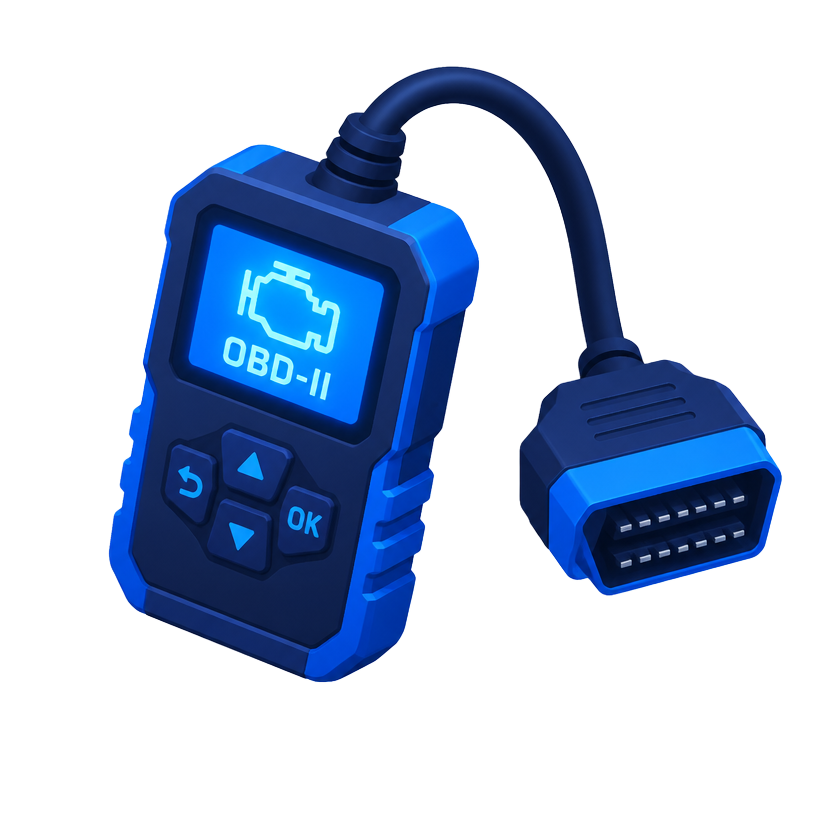
The 16-pin diagnostic link connector is usually under the dashboard on the driver side, near the steering column. Some vehicles hide it behind a small panel or near the center console.
What the computer monitors
The powertrain control module tracks sensors such as oxygen sensors, the mass airflow sensor, coolant temperature, throttle position, and the evaporative emissions system, then compares readings to expected values.
Readiness monitors
Readiness monitors are self-tests the vehicle runs while driving. Emissions inspections often check that most monitors report complete, which is why clearing codes right before a test can cause a delay.
Freeze frame data
When a code sets, the system can save a snapshot of conditions at that moment, such as engine speed, load, and temperature. It helps explain when and how a fault appeared.
Pending vs. confirmed codes
A pending code means a fault was seen once and the system is watching. A confirmed code means it repeated across drive cycles and usually turns on the check engine light.